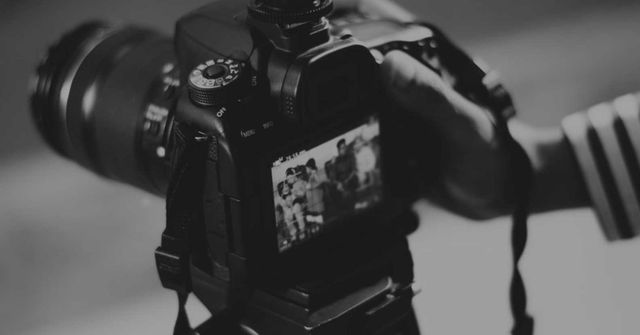
- 4K records four times as many pixels as HD, so fabrics, faces and venue details look sharper, especially on larger modern screens.
- The real editing benefit is flexibility: 4K makes reframing, cleaner crops for social clips, and stronger still-frame grabs far easier.
- Even when the final delivery is HD, footage shot in 4K often looks cleaner because the extra source detail downscales better.
- If you are balancing quality and budget, shooting in 4K and delivering in HD is often the smartest middle ground.
- Couples comparing packages should think beyond resolution alone and also weigh coverage, style, and how they plan to watch their film in years to come.
Most couples choose between 4K and HD wedding video with almost no technical context. That is understandable. You are booking a wedding film, not a television showroom demo. But the difference does matter, and not just in the obvious way. Resolution affects how your film looks on modern screens, what can be done with it during editing, and how well it holds up when you watch it again years from now.
If you are still comparing coverage levels as well as picture quality, our guide to wedding video pricing and coverage is worth reading alongside this one. Resolution is only part of the decision.
4K Captures Four Times the Detail of HD
Standard HD, often called 1080p, records at 1920 by 1080 pixels. 4K records at 3840 by 2160 pixels. In practical terms, that means an HD frame contains about 2 million pixels, while a 4K frame contains just over 8 million. That is not a slight lift. It is four times the visual information in every frame of your wedding film.
On a wedding day, those extra pixels show up in places couples actually care about: lacework in a dress, the texture of flowers, the details in hair and make-up, the flicker of expression during vows, and the look of candlelight or venue décor when the camera moves in close. Wider shots of a ceremony can look perfectly good in HD. The difference becomes clearer when the frame tightens and the emotional detail matters.
That is also why 4K frame grabs are genuinely useful. A still taken from 4K footage is effectively an 8-megapixel image, which can be useful for sharing online or even for smaller prints. The equivalent still from HD footage is much softer and more limited.
Why 4K Often Looks Better Even on an HD Screen
A common assumption is that 4K only matters if you own a 4K television. It is not quite that simple. When footage is captured in 4K and then delivered at HD, the extra source detail is averaged down into fewer pixels. That usually produces a cleaner image with crisper edges, smoother textures, and less visible digital noise than footage captured natively in HD.
So even if your final film is exported at 1080p, starting with 4K can still improve what you actually watch. That makes it a useful compromise for couples who want better capture quality without paying for a premium 4K delivery package, if their videographer offers that option.
The Editing Advantage Couples Rarely Think About
Reframing without losing quality
One of the biggest advantages of 4K is not what you notice while watching. It is what it lets an editor do afterwards. Because the frame contains so much more image data, an editor can crop into a wide 4K shot and still deliver a clean HD close-up. That matters during ceremonies, where camera positions are often restricted and a discreet approach is best.
A single 4K master shot of the altar can become a wider scene, then a tighter crop on the vows or ring exchange, without the editor having to invent detail that was never there. That flexibility can make a one-camera moment feel much richer in the finished film.
Vertical clips and social sharing
If you want short clips for Instagram Reels or similar platforms, 4K helps there too. Vertical edits require a significant crop from landscape footage. With HD, that crop can become soft very quickly. With 4K, there are enough spare pixels to keep the clip looking sharp on a phone screen.
That does not mean your wedding film should be planned around social media, but it is useful when you want a few polished clips after the day without sacrificing clarity.
Future-Proofing Matters More Than It Used To
HD still works, and it will continue to work. But it is also true that 4K is now the default resolution for a huge share of new televisions and large monitors. That means the screens people will be watching on over the next decade are increasingly built to show more detail than HD can provide.
Your wedding film is not something you upgrade every few years. It is one of the few purchases from the day that is specifically meant to grow more valuable with time. That is why future-proofing is worth thinking about. Even if you mainly watch on a laptop or phone today, there is a good chance your film will be played on larger, sharper screens later.
If your priority is a timeless record of the day, our article on documentary wedding video style is also relevant here. Resolution affects picture quality, but style affects how truthful the memory feels.
Low Light and Colour: Resolution Is Not the Whole Story
It is worth saying clearly that 4K is not a magic upgrade on its own. In low-light situations, such as dark churches or evening receptions, the camera sensor and the operator's skill matter more than resolution alone. A good camera shooting HD will outperform a poor camera shooting 4K every time.
That said, when a professional-grade camera is used, 4K can still help in low light because of that same downscaling advantage. Capturing more data and then delivering at HD often produces a cleaner result with less noise. The best outcome is not 4K instead of good gear: it is 4K combined with good gear, strong lighting judgement, and careful post-production.
So Should You Choose 4K or HD?
For most couples, the answer is simple: if 4K is available within a sensible budget, it is usually the stronger option. It gives you more detail, more flexibility in the edit, and a film that is better prepared for the way people actually watch video now.
If budget is tighter, the smartest middle ground is often capture in 4K with delivery in HD. You still get many of the practical benefits: cleaner footage, better reframing, stronger crops, and a more future-ready source file, without necessarily paying for the highest-tier output package.
And if you are also weighing up filming style, our guide to cinematic vs documentary wedding videography will help with the part resolution cannot answer. A beautifully sharp film still needs to feel like your day.
For couples planning a Northern Ireland wedding, E Vision Productions builds wedding films around the moments you will actually want to rewatch, with package options that make it easier to balance coverage, style, and technical quality without overcomplicating the decision.
Want help choosing the right package and capture format for your day? Get in touch and tell us what matters most to you.