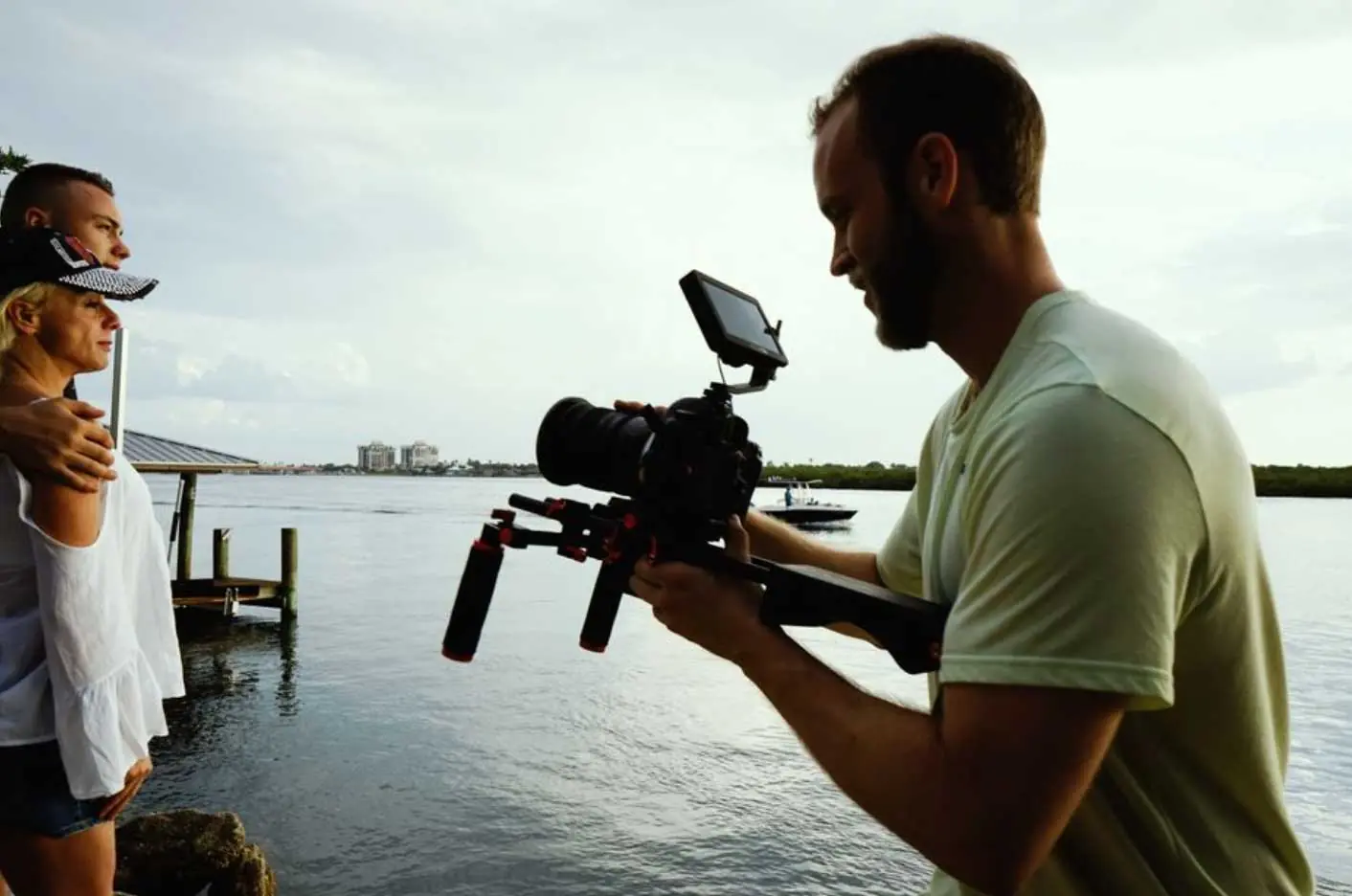
You’ve probably assumed one wedding videographer is enough to capture your day, but there’s a specific moment during most ceremonies that no solo shooter can film: the groom’s reaction while simultaneously recording the bride’s entrance. Here’s how to know what your timeline actually requires.
Short version
- A solo videographer creates a beautiful film — but can only be in one place at a time, meaning some moments will always be a choice rather than a capture.
- Two videographers allow simultaneous coverage of separate locations, multiple angles, and candid reactions that a single camera will simply miss.
- Not every wedding needs two shooters — intimate celebrations with simple timelines are often well-served by one experienced videographer.
- Audio redundancy and on-the-day backup are underrated advantages of a two-shooter team, especially in churches or large Northern Ireland estates.
- The real decision comes down to your specific timeline — a practical framework for working out exactly what your wedding day needs is laid out below.
Choosing between one videographer and two is one of those wedding decisions that feels minor until you understand what actually hangs in the balance. The question is not about having more cameras in the room — it is about how much of a once-in-a-lifetime day can realistically be preserved.
One camera cannot be everywhere at once
Wedding days do not unfold in a neat sequence. While the ceremony is in progress, guests are reacting, parents are tearing up, and the couple are exchanging glances that last a fraction of a second. When cocktails are flying, laughter is happening in corners the camera is not pointing at. During speeches, the speaker, the couple, and a table of emotional family members are all doing something worth capturing — simultaneously.
A single videographer is a skilled professional, not a time traveller. Every choice to point a lens one way is a choice not to point it another. That is the reality behind the one-versus-two debate, and it is why the question matters far more than you might initially realise. At E Vision Productions, we believe coverage is not simply about quantity of footage — it is about which unrepeatable moments can actually be captured as the day moves forward at its own pace.
On solo videographer shoots the aim is to have enough cameras capturing most of the action, usually a wide shot that can also be cropped in when needed. But this is not quite the same as having a second videographer who through instinct, reading the live event, and experience, can capture candid details with ease, and hone in on the finer details which can be missed, even with a wide shot.
What actually changes with two videographers
Coverage vs. selective filming
With one videographer, filming is necessarily selective. An experienced solo shooter knows how to prioritise, anticipate moments, and move efficiently — but the approach is always focused rather than wide-ranging. Key events get covered; the texture around them is thinner.
Two videographers shift the dynamic entirely. Instead of choosing between the couple’s reaction and the guests’ reaction, both can be captured. Instead of a single angle through the ceremony, the edit can cut between a wide locked-off shot and close emotional detail at the same time. There is a lot more scope for movement in the shots, where one camera may move in to get a closer shot, or when one camera operator is focusing in on the rings another can capture the family members reactions as they look on in anticipation. The upshot — the final film gains variety, rhythm, and a fuller sense of the day.
Simultaneous locations, one continuous story
The preparation stage is where this gap is most obvious. If the bride is getting ready at home and the groom is at a hotel several miles away, a solo videographer has to make a choice — or leave one side early to set up at the venue. A two-shooter team splits up, captures both mornings in full, and arrives at the ceremony with setup already handled.
That same principle carries through the rest of the day. One videographer films the bride walking down the aisle; the other films the groom’s reaction. One captures the room during the early reception; the other stays with the couple during photos. The story runs in parallel and comes together in the edit.
When a solo videographer is the right fit
Intimate weddings with simple timelines
There are genuine situations where one videographer is the right choice, not just the budget-friendly one. Smaller weddings — a single getting-ready location, a shorter guest list, a straightforward ceremony-to-reception flow — tend to move at a calmer pace. Overlapping moments are fewer, and an experienced solo shooter can cover the day effectively without meaningful gaps.
When the priority is a clear record of the ceremony, key speeches, and the overall feeling of the day, one videographer can absolutely deliver a strong, emotional film. If you are still working out what to look for, our guide to choosing a wedding videographer covers the questions worth asking before you sign anything.
The trade-offs to accept
The trade-offs are real and worth naming directly:
- If both partners are getting ready in separate locations, coverage of one side will be limited or missed.
- Reaction shots — from guests, parents, or the other partner — are harder to capture when there is only one lens in the room.
- During fast-moving sequences, like during a busy ceremony or during fast-paced photo shoots when drone footage is required or a first dance, fewer angles means fewer options in the edit.
For couples comfortable with a more streamlined wedding story, that is a perfectly reasonable set of trade-offs. The key is going in with clear expectations rather than discovering the gaps when watching the finished film.
When two shooters make a real difference
Ceremonies: reactions you would otherwise miss
The ceremony is the clearest example of where two shooters earn their place. With one videographer, the focus lands on a primary angle — typically the couple at the altar. That is important footage. But a parent’s expression when the doors open, a sibling trying not to cry in the third row, the groom’s face the moment he sees the bride — these are the moments couples most want to relive, and they are happening all at once.
A second shooter captures what the first cannot turn around to film. The result is a more emotionally layered ceremony sequence that reflects how the people involved actually respond on the day.
Larger venues and complex Northern Ireland timelines
Northern Ireland’s wedding venues — country estates, historic castles, coastal walks, large church ceremonies — often involve real distances and recording challenges and tightly packed timelines. Coverage that works in a small town hall simply does not scale to a multi-room estate without a second pair of hands.
Wedding planning guidance consistently suggests that weddings with 80 or more guests, multiple event spaces, or cultural traditions with back-to-back moments are better served by two-shooter teams. The logistics alone — moving between a ceremony room, a drinks reception area, and a banquet hall — make it very difficult for one person to be in position for every significant moment. Our guides to County Antrim, County Down, and the Causeway Coast cover what to expect from coverage at different types of Northern Ireland venues.
Audio, backup, and peace of mind
Redundancy on the day
Audio is easy to overlook when thinking about videography, but vows, speeches, and the officiant’s words are what make a wedding film feel personal a decade later. Professional audio planning should be standard regardless of team size — but two shooters add a meaningful safety net.
One videographer stays locked on the primary event while the other monitors audio conditions, adjusts for changing sound environments in large churches or outdoor spaces, and captures emotional cutaways that support the spoken words in the edit. If a microphone drops out or a battery fails, there is a second person to manage it without the main camera moving. Cameras and memory cards can fail too — a two-shooter team means a technical problem with one kit does not leave a couple without footage of their ceremony.
The hidden workload advantage
There is a less-discussed benefit that experienced videographers talk about openly. Gear loading and unloading, liaising with venue co-ordinators, charging batteries between segments, packing down one room while another event is starting — this admin adds up fast for a solo shooter working under time pressure. When that workload is shared, both videographers stay calmer, more focused, and more present for the moments that matter.
How two shooters shape the final film
The choice between one and two videographers is not just a day-of staffing decision — it shapes what the editor has to work with weeks later. A solo film is often intimate and streamlined, built around decisive moments and clean continuity. In the right hands, that can be genuinely elegant.
A two-shooter film gives the editor far more depth: reactions cut against speeches, wide and close compositions blended together, first looks that show both faces at once. The film feels more dimensional — more like a story and less like a record. If a wedding has simultaneous action, emotional complexity across the room, and multiple spaces to cover, a second perspective gives the editor the raw material to reflect all of that. This is one reason why Northern Ireland wedding videography packages often list two-shooter coverage as a distinct option worth comparing carefully against solo packages.
Your wedding tells you what it needs
The most useful question is not simply whether to hire two videographers — it is what the wedding day is actually going to look like, hour by hour. The answer usually makes the decision straightforward.
One videographer is likely the right fit when:
- Both partners are getting ready in the same or nearby location
- The guest list is smaller and the timeline is relaxed
- The priority is a clear record of key moments rather than wide-ranging coverage
Two videographers make a clear difference when:
- Preparations are happening in separate locations
- The venue spans multiple spaces or involves travel between sites
- The guest count is larger, with lots of simultaneous interaction to capture
- If you want reactions, atmosphere, and the full emotional texture of the day — not just the headline moments
The best approach is to share the actual timeline with your videographer and ask how they would handle it with one shooter versus two. A good answer will be specific to the venue, the ceremony setup, and the moments that matter most — not a generic upsell.
For couples planning a wedding in Northern Ireland, E Vision Productions specialises in wedding videography and can help work out exactly what level of coverage your day genuinely calls for. Our breakdown of wedding videography prices in Northern Ireland covers what different coverage levels actually cost, and our piece on whether wedding videography is worth it addresses the bigger question plainly. Get in touch to check your date.
Planning your own Northern Ireland wedding film? Get in touch to talk through your day.